YouTube Keyword Research Tool
See the exact phrases people type on YouTube before you decide your title.
Find my keywords freeKeyword research on YouTube is simpler than on Google: you are looking for the phrases viewers type into the search bar, and how those phrases differ from the way you would naturally describe your own video.
The gap between the two is where views are lost. A cook thinks “restaurant style paneer”; the viewer types “paneer tikka without oven”. Both are the same video, but only one of them is being searched.
Where the keywords come from
The list is built from YouTube's own search suggestions for your topic — what appears as you type. These are the phrases YouTube already knows people are looking for.
Those suggestions are then expanded into related terms and longer phrases, and the result is grouped so you can see the main phrase, the close variations and the easier long ones separately.
Long-tail keywords are where small channels win
A new channel will not rank for “youtube seo”. It can rank for “youtube seo kaise kare in hindi for beginners”, because far fewer videos target it and the intent is exact.
These longer phrases bring fewer searches each, but the viewers who arrive are the right ones, watch longer, and that is what tells YouTube to show your video more widely.
Reading the list without overthinking it
Pick one main phrase for the title, two or three close ones for the description, and keep the rest for tags. Do not try to fit every keyword into the title — it reads badly and helps nobody.
If a phrase does not honestly describe your video, leave it out. Bringing in viewers who wanted something else hurts you more than missing them would.
Keywords in Indian languages
Search in Hindi and Hinglish behaves differently from English: the same question is typed in several spellings, and both scripts are used. The tool returns these variants instead of a single "correct" one.
That is why a Hindi channel often does best with a Hinglish title and a mix of both in the tags.
How to use it
- Enter the topic of the video you plan to make.
- Choose the language your viewers search in.
- Look at "Your Queries" first — those are real searches.
- Pick one main phrase for your title and keep the rest for tags.
Questions creators ask
Is YouTube keyword research free here?
Yes, you can start on the free plan. Paid plans exist for higher daily limits and the other tools.
Do you show exact search volume numbers?
No, and you should be careful with tools that do. YouTube does not publish search volume publicly, so those numbers are estimates. What we show instead are the real suggestions YouTube gives, which is direct evidence of demand.
How many keywords should I target in one video?
One main phrase, and a handful of related ones. A video that tries to cover five unrelated searches usually ranks for none of them.
Can I research a competitor's keywords?
You can see which of their videos performed best and what topics they cover, using the Channel Analyzer. Copying their exact keywords rarely works, because their channel size and audience are different.
Does keyword research work for Shorts?
Yes. Shorts are searched too, and short, spoken-style phrases tend to do well there.
How often should I redo this?
Once per video is enough. Search phrases change slowly, except around news, trends and festivals — those are worth checking fresh.
📚 Guides for this tool
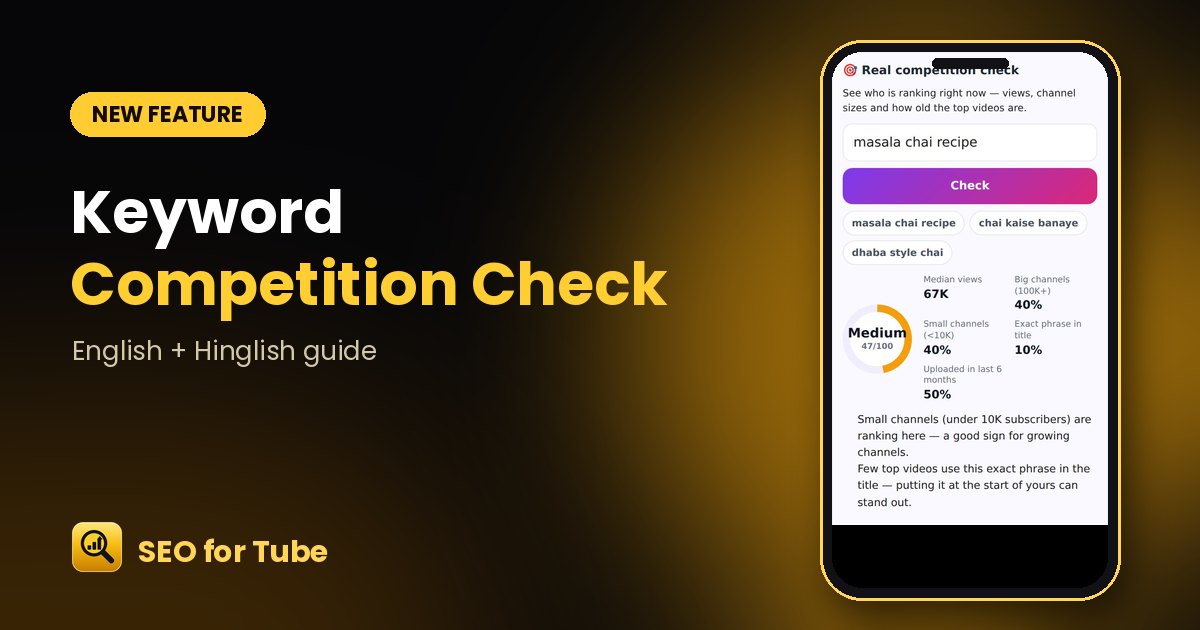 YouTube Keyword Competition Checker: Easy, Medium or Hard?Check real competition for any YouTube keyword: views, channel sizes and video age of the top 10 results, wit…
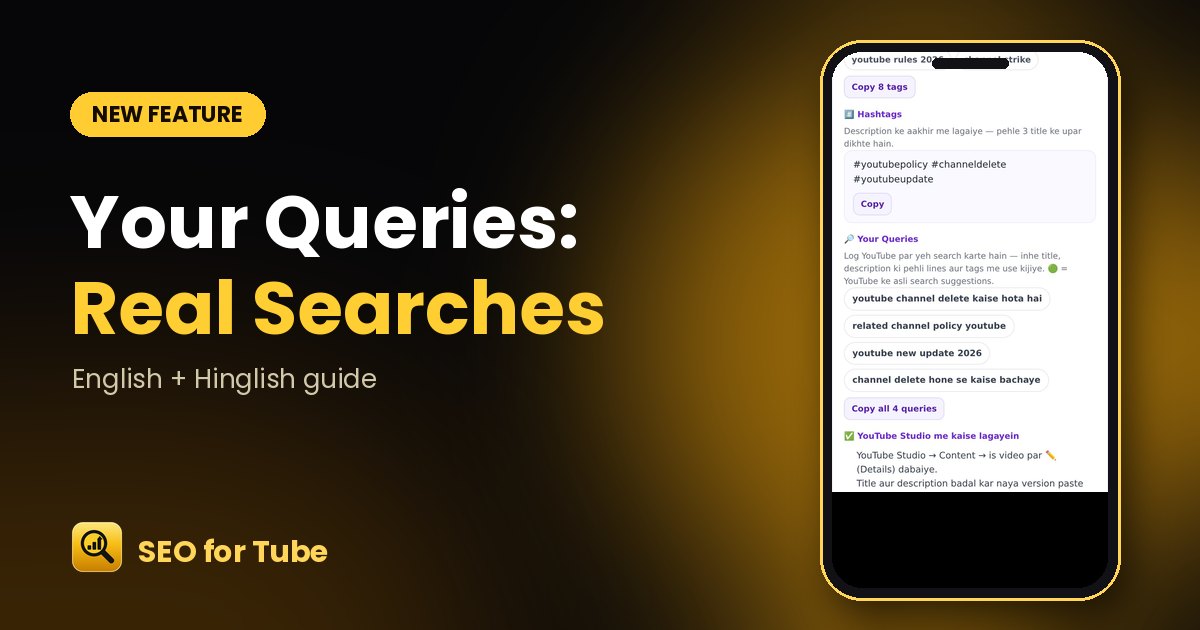 Your Queries: Real YouTube Searches for Your TopicSee what people actually type on YouTube for your topic and use those searches in your title, description and…
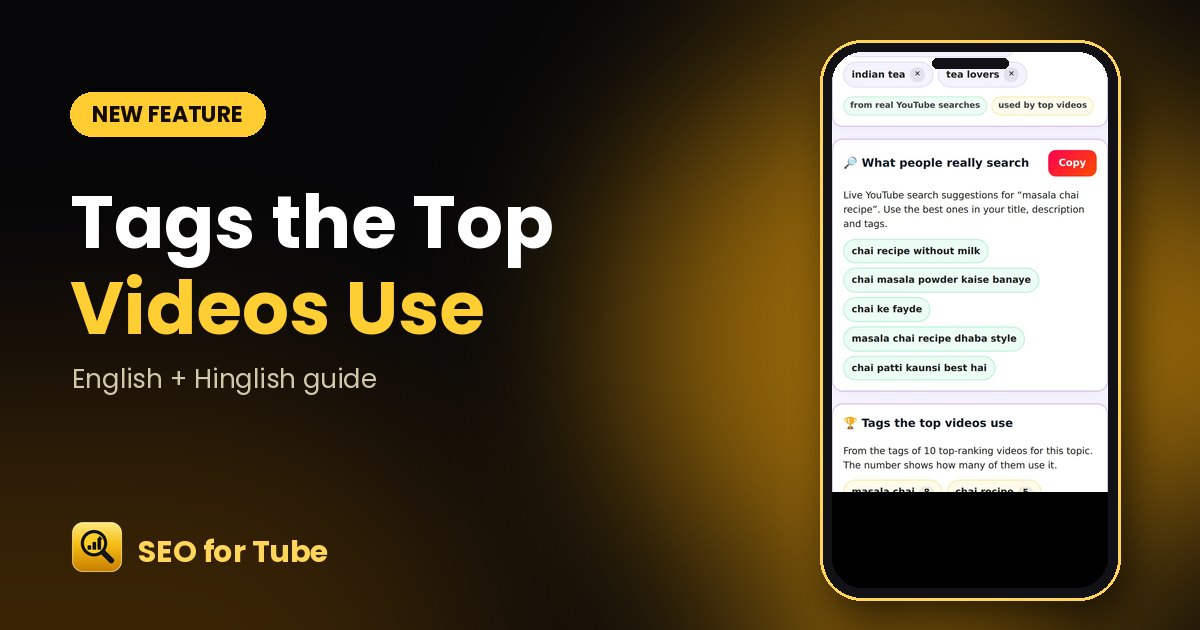 See the Tags Top YouTube Videos Use + Real SearchesFind which tags the top-ranking videos for your topic actually use, how many of them use each, and what peopl…